Botanical family
Smilacaceae
Description
Botanical characteristics
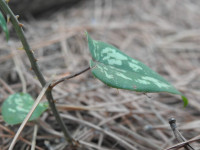
Plants belonging to the family Smilacaceae mainly appear as shrubs or woody climbers, which can reach up to 10 meters in height. The climbing habit is favored by the presence of hooked spines along the branches, which allow the plant to cling and climb on trees or other plants. The leaves are heart-shaped, with sizes varying from 4 to 30 cm depending on the species, and include both deciduous and evergreen forms.
The flowers are gathered in compact clusters, white or green in color, and typically bloom between May and June. Fertilization leads to the formation of spherical berries, with a diameter between 5 and 10 mm, which change color from bright red to blue-black during autumn ripening. These fruits have a pulp of gummy tissue and contain a single central spherical seed. The berries remain on the plants even during winter, representing an important source of food for birds and other animals, which contribute to seed dispersal through their droppings. Reproduction can be limited if only individuals of one sex are present in a colony, since fruit formation requires cross-pollination.
Distribution and diversity
The family Smilacaceae is characterized by a single genus, Smilax, widespread worldwide especially in tropical and subtropical regions. These plants thrive in moist forest environments with acidic soils (pH between 5 and 6) and show remarkable resilience, being able to regenerate even after cutting or fires thanks to underground rhizomes.
Smilax species are adapted to various climatic conditions but prefer temperate and humid environments. Their worldwide distribution and the ability to disperse via seeds ingested by birds and other animals contribute to their broad range.
Main genera and representative species
The family includes only one genus, Smilax, which comprises numerous species. Among the species of interest, some are also known in Italy and the Mediterranean basin, such as Smilax aspera, a climbing species widespread in Mediterranean woods that features characteristic spines and red berries. Other important species are mainly found in the Americas, Asia, and the Pacific.
Etymology
The name of the genus Smilax derives from Greek mythology and is linked to the legend of Crocus and the nymph Smilace. In various versions of the myth, an unrequited love leads to the transformation of a mortal youth into a saffron plant and the nymph Smilace herself into the plant that bears her name. This mythological connection reflects the ancient attention towards climbing plants endowed with spines and elegant heart-shaped leaves.
Curiosities and uses
Smilacaceae play a significant ecological role: the berries represent an important food source for birds and mammals during winter, while the spiny branches offer protection to smaller animals from larger predators. Furthermore, several species are used by various insects, particularly some butterflies and moths, both as a nectar source and as host plants for larvae.
From a human perspective, some Smilax species are employed in food and medicinal contexts. The roots of species such as S. ornata (known as Jamaican sarsaparilla) are used to produce traditional beverages like sarsaparilla and other root beers, as well as soups and stews. In China, S. glabra is an ingredient in traditional pharmacology and the medicinal dessert guīlínggāo, known for its therapeutic properties and as a gelling agent. Some roots are considered traditional remedies against gout and are valued for the presence of active compounds such as diosgenin, parillin, sarsaparillin, sarsapic acid, and sarsaponin.
Smilax plants are also appreciated by beekeepers for honey production, thanks to their nectar-rich flowers. Young shoots are edible and resemble the taste of asparagus, while the berries can be consumed raw or cooked.
Sources
- Wikipedia
Species of the family
1 species catalogued
Explore
Other botanical families