Botanical species
Parietaria officinalis
L.
Eastern Pellitory-of-the-wall
Description
Morphological description
Perennial herbaceous plant, generally 20 to 80 cm tall, with tips that can also reach 100 cm. It has a scapose habit, with erect, cylindrical, fleshy and fragile stems, sometimes lignified at the base. The stems are often reddish in color and covered with fine, non-stinging hairs. The plant develops from an elongated rhizome that allows its perennial nature.
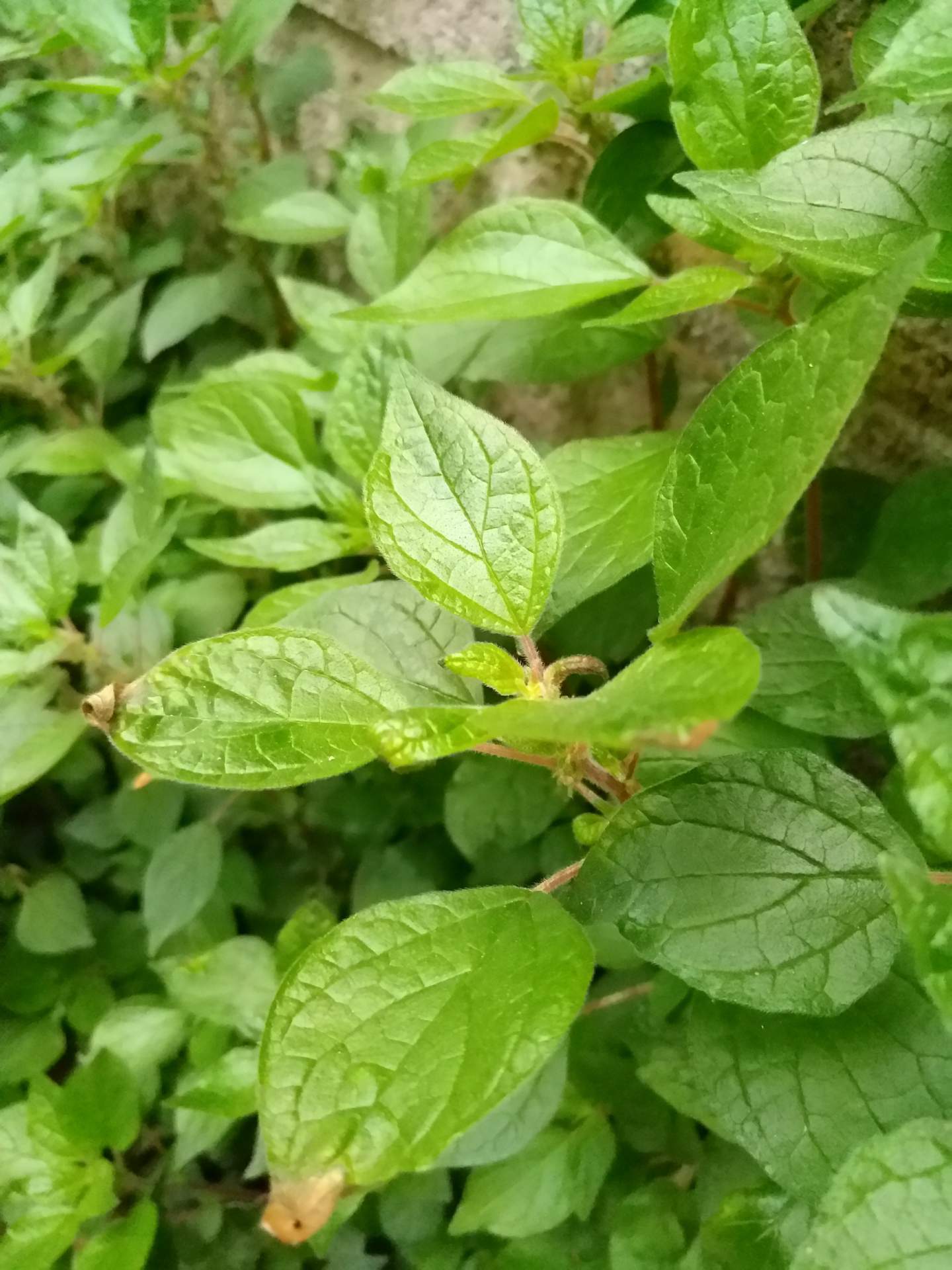
The leaves are alternate, long-petiolate, elliptic-lanceolate in shape, with variable dimensions generally between 2-4 cm in width and 5-10 cm in length (they can also reach 15 cm). The leaf blade has an entire margin, acuminate at the apex and attenuated towards the base, with well-visible transparent veins. The upper surface of the leaves is almost glabrous, while the lower surface has curved hairs especially on the veins, making the leaf slightly sticky to the touch.
The inflorescence consists of dense axillary glomerules of greenish color, containing male, female and hermaphrodite flowers. Each glomerule is formed by a few male and female flowers, with a greater number of hermaphrodite flowers, surrounded by four free sepal-like bracts of similar size. The perianth is monoclamydeous, pubescent, with four lobes that are little or not at all enlarged in fruiting, about 2.75-3 mm long.
The flowers lack a corolla; the stamens are four, arranged opposite the lobes of the perianth, and snap open to release the pollen. The ovary is monocarpellate, with often reddish penicillate stigmas.
The fruit is a schizocarp formed by an achene or nutlet of ovoid shape, about 1.2-2 mm long, shiny black in color, enclosed in the persistent perianth. This structure facilitates seed dispersal.
The root system consists of an elongated rhizome, which allows the plant’s perennial nature and its ability to rapidly colonize substrates.
Habitat and distribution
Nitrophilous, synanthropic species typical of anthropized environments, it grows on nitrogen-rich substrates such as rubble, ruins, old walls and abandoned soils. In nature it is also found in eutrophic forest soils, both moist and dry, up to 900 meters altitude.
The geographical distribution includes all temperate Europe, from France to Ukraine, Western Asia and North Africa. In Italy it is common in many regions, especially in urban, rural and degraded forest environments. In the Mediterranean it adapts well to even poor soils, provided they are rich in organic nutrient substances.
It prefers sunny or partially shaded exposure and easily adapts to rocky or calcareous substrates, often colonizing walls and exposed cliffs.
Flowering period
Flowering extends from May to October, with a higher concentration in the summer period. The prolonged presence of flowers is favored by mild environmental conditions and nutrient availability. In some geographical areas with milder climates, flowering can start as early as May and continue until the first autumn frosts.
Ecology and pollination
The species is anemophilous, meaning pollen is transported by wind, and does not significantly depend on insects for pollination. However, the characteristics of the stamens and the flower structure facilitate pollen dispersion in the air.
Pollination produces highly allergenic pollen, responsible for one of the most common spring and summer allergies. Seed dispersal occurs through the release of achenes enclosed in the persistent perianth, which can also favor mechanical dissemination.
From an ecological point of view, the leaves of this plant provide nourishment to the caterpillars of some butterflies, such as Vanessa atalanta.
Curiosities and traditional uses
The common name "Eastern Pellitory-of-the-wall" derives from the historical use of the sticky leaves to clean the inside of bottles and flasks, exploiting their ability to retain residues and impurities.
From an ethnobotanical perspective, Parietaria officinalis has been known since antiquity for its medicinal properties. It contains active principles such as calcium, potassium salts (especially nitrates), mucilages, sulfur compounds and tannins. These compounds confer diuretic and purifying properties to the plant, useful in the treatment of dropsy, nephritis, cystitis, edema from heart failure and in the prevention of kidney and bladder stones.
For external use, the plant is employed as an emollient and refreshing agent on dermatitis, boils, cracks and small burns.
In the past, young leaves were consumed as a vegetable, similar to spinach, and used to prepare fillings, omelets and soups, highlighting a traditional alimentary use.
Etymology
The genus name, Parietaria, derives from the Latin parietaria, which in turn derives from páries or paríetis, meaning "wall" or "partition", referring to the typical habitat of the plant, which often grows on walls and rocky cliffs.
The specific epithet officinalis indicates its historical use in pharmacy and traditional medicine, emphasizing the officinal importance of this species.
The Italian common name "erba vetriola" refers to the traditional use of the sticky leaves for cleaning glass and bottles.
Sources
- Acta Plantarum - Flora delle regioni italiane (actaplantarum.org)
- Acta Plantarum - Scheda di Anja Michelucci
- Tela Botanica / H. Coste, Flore descriptive et illustrée de la France
- World Flora Online (WFO)
Characteristics
Scheda botanica
| Famiglia | Urticaceae |
|---|---|
| Fioritura | maggio – ottobre |
| Forma biologica | Scapose |
| Habitat | with green flowers, Perennial plant, plant with a scapose habit |
| Uso officinale | Pianta officinale |
Domande frequenti
- Quando fiorisce Eastern Pellitory-of-the-wall?
- Eastern Pellitory-of-the-wall fiorisce maggio – ottobre.
- Che tipo di pianta è Eastern Pellitory-of-the-wall?
- Eastern Pellitory-of-the-wall è una Hemicryptophytes (Scapose) secondo la classificazione di Raunkiaer.
- A quale famiglia appartiene Eastern Pellitory-of-the-wall?
- Eastern Pellitory-of-the-wall appartiene alla famiglia botanica Urticaceae.
Where I found it (1 sightings)
Classification
- Kingdom
- Plantae
- Family
- Urticaceae
- Full name
- Parietaria officinalis L.
- Life form
- Hemicryptophytes scapose
Similar species
Search for species with similar characteristicsFurther reading
Noticed an error in the identification? Write to me
Other species of the same family
Urticaceae
Explore
Other species of Urticaceae