Botanical species
Glaucium flavum
Crantz
Yellow Hornpoppy
Description
Morphological description
Perennial herbaceous plant, glabrous or with scattered bristles at the base, 20 to 60 cm tall, characterized by an erect and branched habit. The stem is robust, glabrescent in the upper part, sometimes glaucescent, with patent bristles scattered mainly at the base.
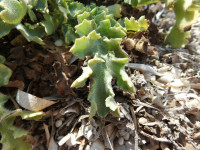
The basal leaves, numerous and arranged in a rosette, are 10 to 30 cm long, herbaceous in texture and glaucous in color. They have a pinnatifid or lyrate-pinnatifid shape, with deeply incised, toothed or lobed lobes, often with a crenate-toothed margin. The cauline leaves are progressively shorter, sessile and clasping the stem, with less pronounced lobes compared to the basal ones.
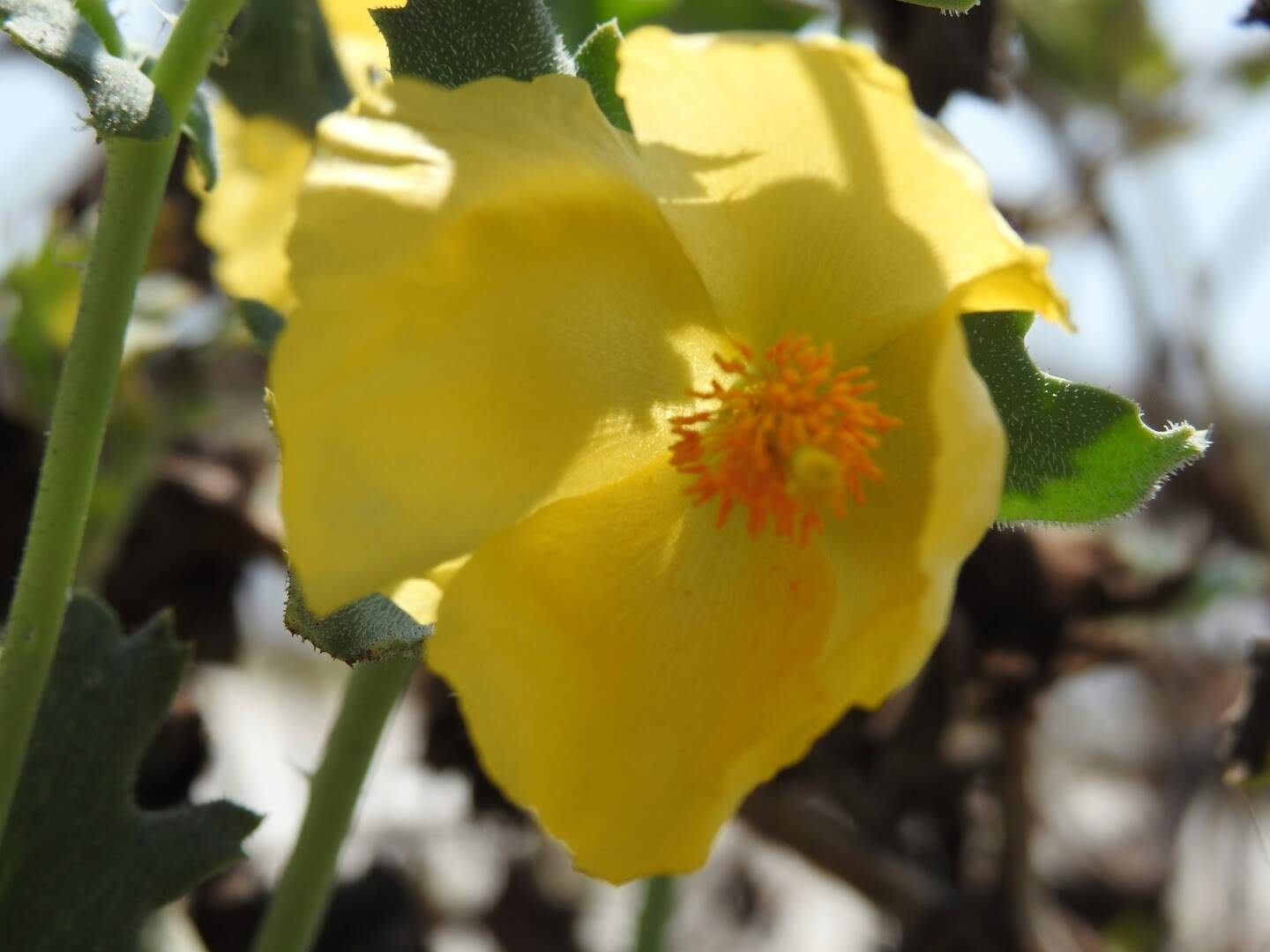
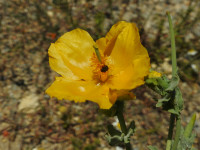
The flowers are terminal, solitary, hermaphrodite and large, with a diameter that can reach 7-9 cm. They have four obovate petals, bright yellow in color, sometimes with orange shades at the base, about 2-4 cm long. The flower is supported by a short, smooth and glabrous peduncle. The sepals are two, oblong-ovate in shape, 15-30 mm long. Numerous stamens with yellow anthers surround a bilocular superior ovary with a mitriform stigma.
The fruit is a long siliquiform capsule, called cerazio, which can exceed 20-30 cm in length. It is glabrous or tuberculate-scabrous, often curved but sometimes straight, and opens by longitudinal dehiscence into two valves from apex to base. The seeds are small (1-1.5 mm), dark, reniform and alveolate.
The root system, typical of psammophilous plants, is robust and suitable for stabilizing coastal sandy soils, but is not described in detail in the sources.
Habitat and distribution
A typically coastal and psammophilous species, it grows on sandy soils, dunes and dry beaches, often in exposed marine environments. It is a halophilous plant, tolerant to salinity. It also frequents stony beaches and soils rich in organic substances, often nitrophilous, from 0 up to about 200 meters of altitude.
In Italy it is widespread along the coasts, particularly in regions with a Mediterranean climate. Its distribution extends to southern and central Europe, up to Scandinavia, and also ranges into western Asia, northern Africa and northern America. In the Mediterranean environment it is common on sandy coasts and sunny, well-drained littoral areas.
Flowering period
Flowering extends from May to October, with peaks especially between June and September. The period may vary slightly depending on latitude and altitude, occurring earlier in warmer areas and later in more northern or mountainous zones.
Ecology and pollination
The plant presents a reproductive strategy typical of scapose hemicryptophytes, with an elongated floral axis often leafless. The flowers, large and showy, are hermaphrodite and open singly at the ends of the branches, facilitating entomogamous pollination. The most common pollinating insects are bees, bumblebees and other hymenopterans attracted by the intense yellow color and nectar.
Seed dispersal occurs through the capsules which, opening longitudinally, release numerous small and light seeds that can be transported by wind or water along the coasts. The plant is well adapted to colonize mobile sandy soils, contributing to dune stabilization.
Curiosities and traditional uses
Yellow Hornpoppy is a toxic species, containing alkaloids such as glaucine, an active principle with bronchodilator, anti-inflammatory and cough sedative properties. Traditionally, the leaves were used in folk medicine for these purposes, however uncontrolled intake can cause serious side effects such as hallucinations, vomiting and tachycardia.
Besides medicinal uses, the plant is also appreciated for ornamental purposes, especially in gardens near the sea, where it is used to create colorful flowerbeds together with other Papaveraceae.
The common name “papavero cornuto” derives from the elongated and pointed shape of the fruit capsules, which resemble horns.
Etymology
The scientific name derives from the Greek "glaukós", meaning “blue-green” or “glaucous”, referring to the slight waxy and glaucescent coating of the leaves. The specific epithet "flavum" comes from the Latin “flavus”, meaning yellow, to recall the bright color of the petals.
The Italian common name “papavero cornuto” refers to the elongated horn-like capsules that constitute the characteristic fruit of the species.
Sources
- Prof. S. Pignatti, "Flora d'Italia"
- Acta Plantarum - Flora delle regioni italiane (scheda di Nino Messina)
- Tela Botanica / H. Coste, "Flore descriptive et illustrée de la France"
- World Flora Online (WFO)
Characteristics
Scheda botanica
| Famiglia | Papaveraceae |
|---|---|
| Fioritura | maggio – ottobre |
| Forma biologica | Scapose |
| Habitat | with yellow flowers, toxic plant, psammophilous plant |
| Tossicità | Tossica — non consumare |
Domande frequenti
- Quando fiorisce Yellow Hornpoppy?
- Yellow Hornpoppy fiorisce maggio – ottobre.
- È tossica Yellow Hornpoppy?
- Yellow Hornpoppy è una pianta tossica o velenosa. Non consumare nessuna sua parte senza aver consultato un esperto.
- Che tipo di pianta è Yellow Hornpoppy?
- Yellow Hornpoppy è una Hemicryptophytes (Scapose) secondo la classificazione di Raunkiaer.
- A quale famiglia appartiene Yellow Hornpoppy?
- Yellow Hornpoppy appartiene alla famiglia botanica Papaveraceae.
Where I found it (13 sightings)
Classification
- Kingdom
- Plantae
- Family
- Papaveraceae
- Full name
- Glaucium flavum Crantz
- Life form
- Hemicryptophytes scapose
Similar species
Search for species with similar characteristicsFurther reading
Noticed an error in the identification? Write to me
Other species of the same family
Papaveraceae
Explore
Other species of Papaveraceae