Botanical family
Papaveraceae
Description
Botanical characteristics
The Papaveraceae are mostly herbaceous plants, rarely lianas, shrubs or even trees, characterized by the presence of laticiferous vessels that produce a latex often containing alkaloids. The leaves are generally alternate and frequently lobed or divided, with a spaced arrangement along the stem.
The flowers are bisexual, usually actinomorphic (radially symmetrical) and cyclic, composed of two sepals that generally fall off early, four or six petals (in some cases up to six) and a variable number of stamens, which can be two, four or numerous. The ovary is superior and contains several ovules. The flowers can be solitary or arranged in inflorescences according to specific patterns. The typical fruit is a capsule that opens to release the seeds.
A distinctive trait of many species of this family is the presence of alkaloid substances, which in some species of Papaveraceae are particularly relevant from a pharmacological point of view.
Distribution and diversity
This family is mainly distributed in the temperate and subtropical regions of the northern hemisphere, but some species have adapted to live in mountainous or subpolar environments. Globally it includes about 775 species distributed in 42 genera, according to the most recent phylogenetic classification.
The Papaveraceae are part of the order Ranunculales and their modern taxonomy also includes the subfamily Fumarioideae, previously considered a separate family (Fumariaceae).
Main genera and representative species
Among the most important and well-known genera of the family are:
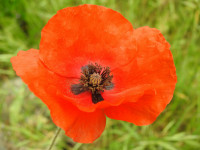
- Papaver, the type genus, which includes species such as Papaver rhoeas (common poppy), widespread also in Italy, and Papaver somniferum, known for the production of opium.
- Corydalis, characterized by zygomorphic flowers and often perennial herbaceous species.
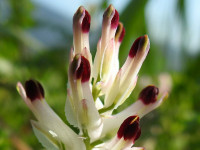
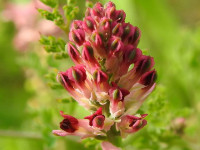
- Fumaria, with annual herbaceous species that have small and delicate flowers.
- Eschscholzia, a genus with species with showy and ornamental flowers such as Eschscholzia californica (California poppy).
- Chelidonium, with species like Chelidonium majus (celandine), often used in phytotherapy.
- Sanguinaria, with Sanguinaria canadensis, known for its red latex.
In Italy there are numerous species of Papaver, Fumaria and Corydalis, widespread in various habitats, from cultivated fields to forest edges.
Etymology
The family name derives from the genus Papaver, a Latin name indicating the poppy, a symbolic and widely known plant since antiquity for its showy flowers and for some species used in medicine and agriculture.
Curiosities and uses
Many species of Papaveraceae are known for the presence of alkaloids, substances that in some plants are used in medicinal contexts, as in the case of the opium poppy. Some species are cultivated for ornamental purposes due to their colorful and showy flowers.
The family also has some ecological importance, as many species provide nectar and pollen to numerous pollinating insects.
Sources
- Wikipedia
Species of the family
4 species catalogued
Explore
Other botanical families