Botanical species
Limonium acutifolium
(Rchb.) Salmon
Limonio a foglie acute
Description
Morphological description
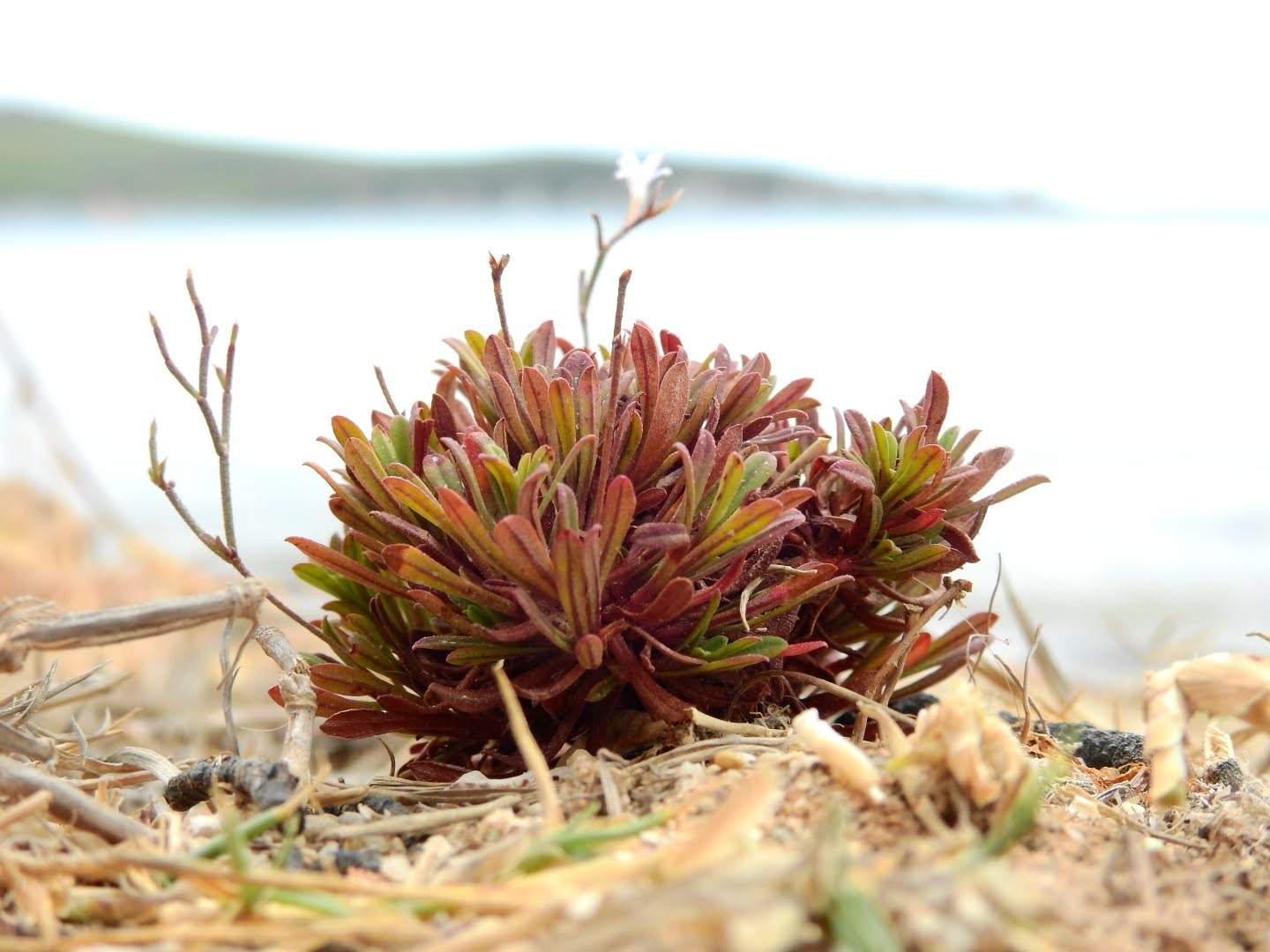
Perennial suffrutescent plant with a bushy habit, Limonium acutifolium has a woody stem, dense with leaves, generally reaching a height between 4 and 12 cm. The stem is robust and persistent, giving the plant a compact structure resistant to coastal environments.
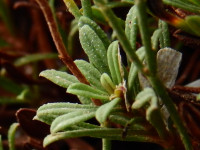
The leaves are narrowly linear or subspatulate, with a sharply acute tip, from which the specific name "acutifolium" derives. Their shape is tapered and elongated, with entire margins and often leathery surface, characteristics that contribute to their ability to withstand drought and windy conditions typical of coastal habitats. The plant is evergreen, retaining its leaves throughout the year.
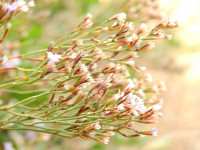
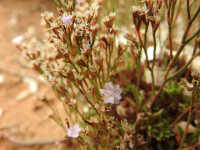
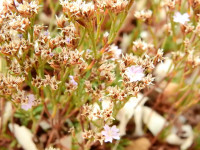
The flowers appear in very compact panicle inflorescences, small in size (3-6 cm in length), with few sterile branches. The spikelets are generally biflorous (containing two flowers each), and the inner bract measures between 4 and 5.5 mm. The calyx of the flowers is between 4.8 and 5.8 mm long. The flowers have a pale lilac color, characteristic and easily recognizable, making them visually attractive to pollinating insects.
The plant's characteristics, such as the woody texture of the stem and the shape of the leaves, make it suitable for living in exposed and sandy environments, typical of Mediterranean coastal areas.
Habitat and distribution
Limonium acutifolium is an endemic species of the western Mediterranean basin, with a limited but well-defined distribution. In Italy, it is mainly reported in the northern sector of Sardinia, while in the Mediterranean context it is also found in Corsica and on the island of Capraia. Its presence is therefore mainly confined to the coasts of these islands, where it develops in coastal environments.
It prefers sandy and well-drained soils, often near the sea, where salinity and wind exposure are high. This species is typical of sunny littoral zones, which favor flowering and vegetative development. The growth altitude is generally low, limited to coastal areas up to a few meters above sea level, consistent with its specialized habitat.
Flowering period
Flowering occurs from June to August, the summer period when Mediterranean climatic conditions are most favorable for reproduction. No significant geographic variations in the flowering period are known, which remains rather uniform within its distribution range.
Ecology and pollination
The lilac-colored flowers attract various pollinating insects, particularly pollinators such as bees and butterflies, which are attracted by the hue and the availability of nectar. The structure of the inflorescences, with biflorous spikelets and well-developed calyces, facilitates entomogamous pollination (insect-mediated). The plant is therefore well integrated into coastal ecosystems, participating in local ecological balances through relationships with pollinating insects.
No specific data are available on seed dispersal of this species, but it is likely that, as with many Limonium species, dispersal occurs by wind or by falling near the mother plant, given the coastal and open position of the habitats.
Curiosities and traditional uses
No specific ethnobotanical, medicinal, or food uses are documented for this species, probably due to its limited distribution and presence in protected natural environments. However, the genus Limonium in general is known in some Mediterranean cultures for ornamental properties and occasionally for medicinal uses, although not directly attributable to Limonium acutifolium.
Etymology
The genus name, Limonium, derives from the Greek "leimon" meaning "meadow," recalling the natural habitat of many species of the genus, often herbaceous plants growing in meadows or open environments. The specific name acutifolium derives from Latin and means "with acute leaves," referring to the particularly pointed shape of the leaves of this species.
The Italian common name "limonio a foglie acute" is a direct translation of the scientific name, emphasizing precisely this distinctive characteristic of the leaves.
Sources
- Prof. S. Pignatti, "Flora d'Italia"
Characteristics
Where I found it (19 sightings)
Classification
- Kingdom
- Plantae
- Family
- Plumbaginaceae
- Full name
- Limonium acutifolium (Rchb.) Salmon
- Synonyms
- Limonium minutum (L.) Chaz. subsp. acutifolium (Rchb.) P.Fourn.; Statice acutifolia Rchb.; Statice minuta L. var. acutifolia (Rchb.) Boiss.
- Life form
- Camefite suffruticose
Similar species
Search for species with similar characteristicsNoticed an error in the identification? Write to me
Other species of the same family
Plumbaginaceae
Explore
Other species of Plumbaginaceae