Botanical species
Epilobium montanum
L.
Broad-leaved Willowherb
Description
Morphological description
Perennial herbaceous plant, Broad-leaved Willowherb has an erect, subcylindrical stem, ranging from 20 to 80 cm in height, sometimes reaching up to 1 meter. The stem surface is generally glabrous or slightly pubescent, especially in the upper part, and lacks stolons or basal rosettes. The stem develops from a short rhizomatous root with subsessile buds, without branched stolons.
The leaves are mainly arranged oppositely along the stem, except for those closest to the inflorescence, which are alternate and sessile. The median leaves are lanceolate, with a blade length between 1.5 and 10 cm and width 3.5-8 cm, herbaceous in texture, with a strongly toothed or serrated margin and rounded base. The size and intensity of the green vary slightly, with larger and brighter green leaves in the lower parts. These characteristics make it easy to distinguish the species from similar ones, such as Epilobium lanceolatum, which has cuneate leaves at the base and longer petioles.
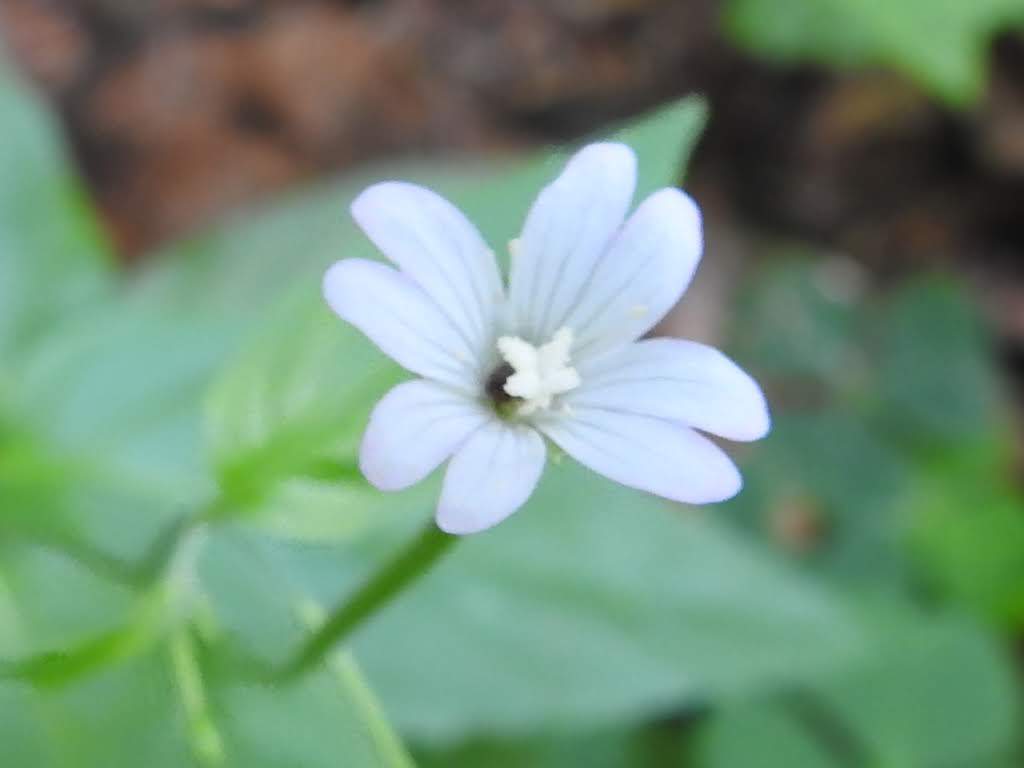
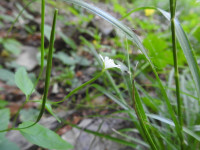
The inflorescence is scapose, borne on long naked stalks arising from the leaf axils, with tetramerous flowers (four petals and four sepals). The flowers vary in color from pale pink-lilac to almost pure white, with obcordate and bilobed petals measuring between 6 and 12 mm. The sepals are shorter, 3-5 mm, scattered with fine hairs and slightly pubescent. There are eight stamens, while the style divides into four lobes that open crosswise, a distinctive feature of the genus. The buds are initially reclined and straighten at anthesis.
The fruit is an elongated cylindrical capsule, 5 to 8 cm long, covered with thin and light glandular hairs. At maturity, it opens longitudinally releasing numerous feathery seeds, facilitating anemochory (wind dispersal).
The root system, not always described in detail, consists of a short and rhizomatous root, which allows the plant to survive for several years, classifying it as a scapose hemicryptophyte.
Habitat and distribution
Broad-leaved Willowherb is a Eurasian species, widespread throughout Europe, from the Mediterranean region to Iceland, and extends into Western Asia and Siberia. In Italy, it is present in most of the territory, with a clear preference for mountainous and hilly areas.
It prefers woodland environments and clearings, with particular affinity for moist and cool sites characterized by the presence of watercourses such as springs, streams, brooks, and rivers. It grows on predominantly siliceous soils, well-drained but kept moist, at altitudes ranging from the plains up to 2000 meters, with a wide climatic tolerance.
The typical habitat includes mixed forests and mountain clearings, but the species also adapts to trail edges and moist grassy areas, often in association with other hygrophilous plants.
Flowering period
Flowering extends from June to September, peaking in the central summer months. In some more northern areas or at higher altitudes, the period may vary slightly, advancing or delaying depending on local climatic conditions.
Ecology and pollination
The plant has a mixed reproductive strategy, based both on sexual reproduction through entomophilous pollination and vegetative reproduction by budding from rhizomes. The flowers, with delicate colors ranging from pink to white and an open structure, are visited by numerous pollinating insects, including bees, bumblebees, and butterflies, which promote cross-pollination.
The presence of stigmas diverging in a cross shape and bilobed petals facilitates access to nectar by pollinating insects. The feathery seeds are dispersed by the wind thanks to the capsule that opens longitudinally, allowing effective colonization of new suitable moist sites.
Curiosities and traditional uses
No particularly widespread food or medicinal uses are documented for this species, nor relevant folkloric references. The common name "Broad-leaved Willowherb" vaguely recalls the delicate appearance of its flowers, similar to small carnations, while the specific epithet “montanum” emphasizes its preference for mountainous environments.
The genus Epilobium is known in traditional medicine for some species used against urinary or inflammatory disorders, but there are no specific testimonies for Epilobium montanum in this regard.
Etymology
The genus name derives from the Greek “epi” (above) and “lobòs” (lobe), referring to the position of the petals located above the ovary in the flower. The specific epithet “montanum” indicates the typical habitat of the plant, i.e., mountainous areas.
The Italian common name “Broad-leaved Willowherb” probably derives from the visual resemblance of the flowers, small and delicate, similar to miniature carnations, combined with the altitudinal and environmental characteristic of the species.
Sources
- Prof. S. Pignatti, "Flora d'Italia"
- Acta Plantarum - Flora delle regioni italiane (scheda di Marinella Zepigi)
- Tela Botanica / H. Coste, "Flore descriptive et illustrée de la France"
- World Flora Online (WFO)
Characteristics
Where I found it (6 sightings)
Classification
- Kingdom
- Plantae
- Family
- Onagraceae
- Full name
- Epilobium montanum L.
- Life form
- Emicriptofite scapose
Similar species
Search for species with similar characteristicsFurther reading
Noticed an error in the identification? Write to me
Other species of the same family
Onagraceae
Explore
Other species of Onagraceae