Description
Botanical characteristics
The Apocynaceae are a family of dicotyledonous angiosperm plants that include trees, shrubs, lianas, and mostly perennial herbaceous plants. The habit therefore varies from woody to herbaceous forms, with a strong presence of succulent species especially in tropical and subtropical environments. The leaves are generally simple, with entire margins, arranged oppositely, whorled, or alternately, and in some cases equipped with rudimentary stipules.
The flowers are hermaphroditic, actinomorphic, and pentamerous, with the most common floral formula K(5) [C(5) A5] G(2). The calyx is gamosepalous, that is with sepals fused at the base, while the corolla is gamopetalous and often funnel-shaped. A distinctive feature of the family is the presence of appendages in the throat of the corolla. The androecium consists of five epipetalous stamens, while the gynoecium is formed by 2 to 5 carpels fused into an ovary that can be superior or semi-inferior.
The fruit can take various forms: capsule, berry, drupe, or follicle. The seeds are often equipped with a tuft of hairs (pappus) that facilitates dispersal by wind (anemochory).
A peculiar trait of some subfamilies is the organization of the pollen. In Rauvolfioideae and Apocynoideae the pollen appears as monads or tetrads, while in Periplocoideae and especially in Asclepiadoideae the pollen is aggregated into complex structures called pollinia, which attach to pollinators via special adhesive structures.
Distribution and diversity
The family has a cosmopolitan distribution, with prevalence in tropical and subtropical regions. However, some species are also common in temperate zones, such as in Italy and the Mediterranean basin. Worldwide, the family comprises about 366 genera, divided into five main subfamilies: Rauvolfioideae, Apocynoideae, Periplocoideae, Secamonoideae, and Asclepiadoideae. The total number of species is very high, including succulent, shrubby, and herbaceous forms.
Main genera and representative species
Among the best-known genera of ornamental or pharmacological interest are:
- Nerium (oleander), a Mediterranean species widely cultivated as an ornamental plant.
- Catharanthus (Madagascar periwinkle), known for its alkaloids used in pharmaceuticals.
- Plumeria and Adenium, native to tropical regions, highly valued for their showy flowers.
- Carissa and Acokanthera, with edible fruits used in some African cultures.
- Rauvolfia, important for alkaloids with sedative and hypotensive action.
- Strophanthus, containing cardiotonic alkaloids used in medicine.
In Italy, besides oleander, some spontaneous or naturalized species belonging to the family are present, mainly in warmer climate areas.
Etymology
The family name derives from the type genus Apocynum, a name that in Greek means "dog poison," referring to the toxicity of some species belonging to this family.
Curiosities and uses
The Apocynaceae play an important ecological role, as many species produce toxic alkaloids, particularly cardenolides, which act as a chemical defense mechanism against herbivores. Some insects, such as certain butterflies and beetles, have adapted to these compounds, sequestering them in their tissues to defend themselves from predators.
From a human perspective, many species are used as ornamental plants thanks to their showy and often fragrant flowers, preferring sunny exposures. Some genera provide gums or resins used industrially, although with minor applications.
In pharmacology, the family is of particular interest due to the presence of numerous alkaloids with therapeutic properties. Catharanthus roseus is famous for its antitumor alkaloids, used especially against certain leukemias. Strophanthus provides cardiotonic active principles employed in the treatment of heart failure, while Rauvolfia serpentina contains alkaloids with hypotensive and sedative effects.
From a food perspective, some species are used by African populations for edible fruits, such as those of Carissa and Acokanthera.
Sources
- Wikipedia
Species of the family
3 species catalogued
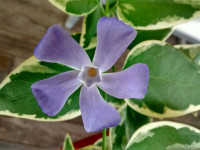
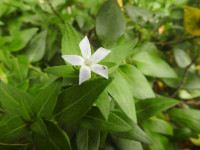
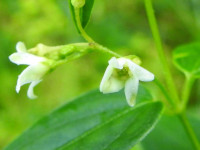
Explore
Other botanical families