Botanical species
Hedera helix
L.
English Ivy
Description
Morphological description
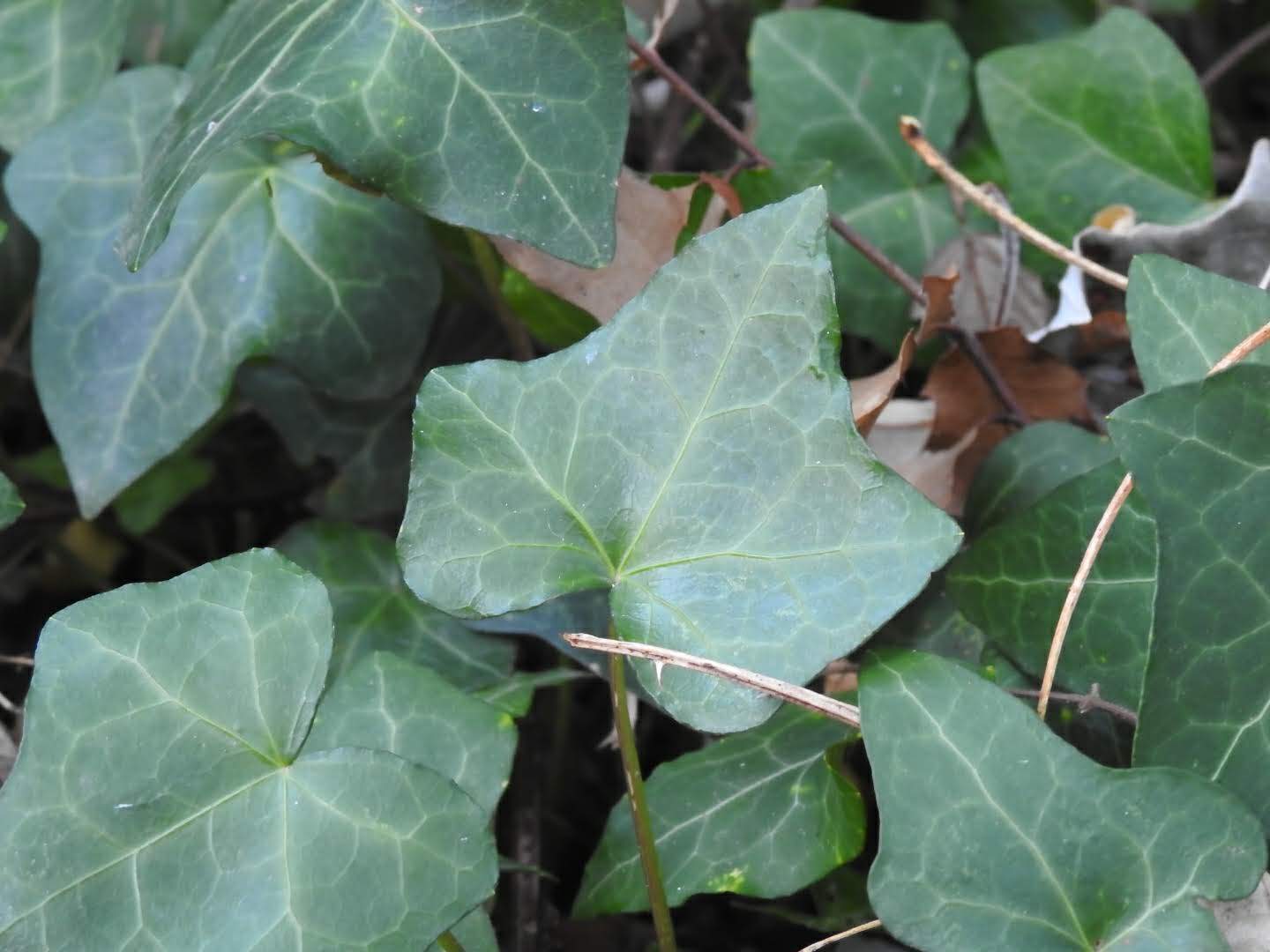
Evergreen shrubby plant, lianoid, with climbing or creeping habit, English Ivy can reach lengths up to 20 meters. Young stems are herbaceous, then become semi-woody and hairy due to adventitious roots that emerge at the nodes. These roots allow the plant to firmly cling to walls, trunks, rocks, or adhere to the ground when vertical growth is not possible. The bark of aged stems becomes grayish and fissured.
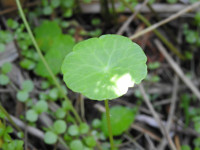
The leaves are leathery, persistent, dark glossy green on the upper side, with well-visible whitish veins. They have an entire margin and variable shape, showing a clear example of heterophylly: the leaves on young, creeping branches or at the base of trunks are palmately lobed (3-5 deep lobes), while on higher, flowering, and sun-exposed branches they take an ovate-rhomboid entire shape. They are also petiolate and have a smooth margin.
The inflorescences consist of 2-3 small terminal umbels, each with 8-20 small flowers, yellow-greenish in color. The flowers, about 3-4 mm long, are rich in nectar and appear in autumn (September-November). They have a calyx with 5 teeth fused to the ovary, 5 lanceolate petals folded towards the petiole, 5 stamens with yellow anthers, and a single pistil; the ovary is inferior and five-locular, the stigma sessile.
The fruits are ovoid berries, initially green, then reddish, and finally black-blue at maturity, about 8-10 mm in diameter. They contain 2-3 stones with a papery endocarp and oblong, wrinkled, reddish seeds. These fruits are toxic to humans but represent an important food source for winter birds such as thrushes and blackbirds.
The root system includes both anchoring roots and adventitious roots emitted along the twining stems, allowing the plant's tenacious adherence to the substrate.
Habitat and distribution
English Ivy is a species ubiquitously present in Italy, widespread throughout the territory and much of the Mediterranean area and Western Europe. It grows from 0 up to 1,450 meters altitude, preferring cool, humid, and shady environments. It is common in woods, along walls, on rocks and trunks, where it climbs or spreads as ground cover. It prefers stable substrates where its adventitious roots find anchorage, and suboceanic or sub-Mediterranean climate environments. In some areas, it can become invasive, colonizing even artificial surfaces.
Flowering period
Flowering occurs mainly in autumn, between September and November, with possible slight geographical variations related to altitude and local climate. The yellow-greenish flowers are particularly rich in nectar, favoring the attraction of pollinating insects.
Ecology and pollination
English Ivy relies on insect pollinators attracted by the abundant nectar of the autumn flowers. The reproductive strategy involves producing berries that mature the following spring, which, although toxic to humans, are consumed by birds that facilitate seed dispersal through grinding and deposition in the soil. The plant can assume both a climbing habit, clinging with adventitious roots, and a creeping ground cover habit when vertical supports are not found.
Curiosities and traditional uses
English Ivy is a medicinal plant with a history of use both medicinally and cosmetically, although all its parts are toxic, especially young leaves and fruits. Among its active principles are triterpenic saponins (particularly hederin), alkaloids such as emetine, flavonoids, steroids, essential oils, and phenolic acids. These compounds confer antibacterial, expectorant, analgesic, antispasmodic, antipyretic, and vasoconstrictive properties to English Ivy.
Traditionally, it has been used to treat respiratory disorders such as bronchitis and whooping cough, as well as rheumatic pains and gout. For external use, English Ivy extracts are used to soothe skin eruptions, swelling, varicose veins, neuralgia, burns, scabies, and cellulite. In cosmetics, it is valued for its toning and astringent action, useful in combating skin tone loss and fluid retention, which is why it is present in many anti-cellulite preparations.
In the domestic sphere, English Ivy has also been used to polish silverware (ashes from branches) and dark hair (decoctions for rinsing). Leaves boiled with soda can replace soap for washing clothes, while an infusion of leaves is used to restore color to faded black fabrics.
It is important to emphasize that ingestion of parts of the plant can cause severe poisoning, with symptoms ranging from nausea and vomiting to central nervous system depression, up to coma. Skin contact can cause irritation and allergies.
English Ivy is often mistakenly considered a parasitic plant, but in reality, it does not suck sap from host plants; it merely clings to them via adventitious roots.
Etymology
The generic name Hedera derives from Latin and means "I cling," referring to the plant's ability to firmly attach to supports thanks to adventitious roots. The specific epithet helix comes from Greek and means "twisting" or "spiral," recalling the way the stems coil around objects. The common Italian name "edera" derives directly from the Latin root, maintaining the meaning of a plant that adheres.
Sources
- Acta Plantarum - Flora delle regioni italiane (actaplantarum.org)
- Acta Plantarum - Flora delle regioni italiane (scheda di Marinella Zepigi)
- World Flora Online (WFO)
Characteristics
Scheda botanica
| Famiglia | Araliaceae |
|---|---|
| Fioritura | settembre – ottobre |
| Forma biologica | Lianescent |
| Habitat | with yellow flowers, creeping plant, toxic plant |
| Tossicità | Tossica — non consumare |
| Uso officinale | Pianta officinale |
Domande frequenti
- Quando fiorisce English Ivy?
- English Ivy fiorisce settembre – ottobre.
- È tossica English Ivy?
- English Ivy è una pianta tossica o velenosa. Non consumare nessuna sua parte senza aver consultato un esperto.
- Che tipo di pianta è English Ivy?
- English Ivy è una Phanerophytes (Lianescent) secondo la classificazione di Raunkiaer.
- A quale famiglia appartiene English Ivy?
- English Ivy appartiene alla famiglia botanica Araliaceae.
Where I found it (4 sightings)
Classification
- Kingdom
- Plantae
- Family
- Araliaceae
- Full name
- Hedera helix L.
- Synonyms
- Hedera helix L. f. poetarum (Nyman) McAll. & A.Rutherf.; Hedera helix L. subsp. poetarum Nyman
- Life form
- Phanerophytes lianescent
Similar species
Search for species with similar characteristicsFurther reading
Noticed an error in the identification? Write to me
Other species of the same family
Araliaceae
Explore
Other species of Araliaceae