Botanical family
Araliaceae
Description
Botanical characteristics
The Araliaceae are a family of angiosperm plants that includes trees, shrubs, lianas, and rarely also perennial herbaceous plants. The typical habit is mainly woody, with many climbing species that produce adventitious roots to anchor themselves to vertical supports such as trees or walls. The leaves are arranged spirally and can be simple or compound, often pinnate or palmate, and are equipped with stipules.
The flowers are generally hermaphroditic or unisexual, small in size, actinomorphic, and arranged in panicle or umbel inflorescences. The floral structure is tetramerous and pentamerous: the calyx is formed by 5 sepals reduced to short scales; the corolla by 5 free petals; the androecium by 5 stamens; the gynoecium by 5 carpels fused into an inferior ovary with 5 locules each containing one ovule. The representative floral formula is K 5, C 5, A 5, G (5).
The fruits are generally drupes or berries, typically with seeds contained in 5 locules.
Distribution and diversity
The Araliaceae are predominantly present in the tropical and subtropical regions of the world, especially in Southeast Asia and the American tropical belts. Only a few species have adapted to temperate climates. Overall, the family includes over 250 species distributed in two main subfamilies: Aralioideae and Hydrocotyloideae.
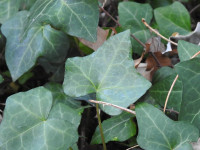
In Italy there is only one native species, Hedera helix (common ivy), an evergreen climber typical of cool and humid woods. This species is well known and cultivated in numerous ornamental varieties for the beauty of its foliage.
Main genera and representative species
The family includes several important genera, among which:
- Hedera: with the species Hedera helix, common ivy, which represents the only native Italian species.
- Fatsia: includes species such as Fatsia japonica, an ornamental shrub.
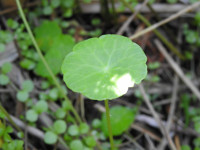
- Hydrocotyle and Trachymene: belonging to the subfamily Hydrocotyloideae, these genera have been suggested by molecular phylogenetics as belonging to the Araliaceae, although they have traditionally been classified in the Apiaceae.
- Schefflera: a very large and complex pantropical genus, whose taxonomic definition is still uncertain from a phylogenetic point of view, with proposals for subdivision into several distinct genera.
A noteworthy intergeneric hybrid is ×Fatshedera lizei, obtained in France in 1912 from the cross between Fatsia japonica and Hedera helix.
Etymology
The family name derives from the type genus Aralia, which in turn may have ancient and uncertain origins, but is historically recognized and used in botanical classification since the 18th century.
Curiosities and uses
The Araliaceae have an important ecological role in tropical forests, where many climbing species contribute to the vegetation structure and provide shelter and food for local fauna. Pollination occurs through wind (anemogamy) and insects (entomogamy), mainly flies and wasps, also in autumn; in some genera such as Hedera, fruit maturation occurs the following year.
Some species are highly appreciated as ornamental plants for their decorative foliage, such as Hedera helix and Fatsia japonica. Ivy, in particular, is widely used both in gardens and indoors. No precise information on food or medicinal uses is reported in the provided documentation.
Sources
- Wikipedia (Araliaceae)
Species of the family
2 species catalogued
Explore
Other botanical families