Botanical family
Violaceae
Description
Botanical characteristics
Plants belonging to the family Violaceae are mainly herbaceous, although in tropical environments arboreal forms can be found. The typical habit includes both herbaceous species and small trees, with generally spiral leaves equipped with stipules.
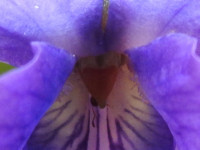
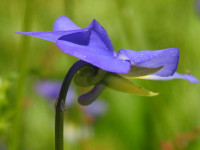
The flowers are hermaphroditic and present zygomorphic symmetry, that is bilateral, although in some exotic genera such as Rinorea they can be actinomorphic (radially symmetrical). The floral structure is composed of four whorls and five merismatic elements: five sepals, of which those of the genus Viola extend backward forming small leaflets; five petals, with the lower one often modified into a spur that acts as a nectary; five generally free stamens; and a gynoecium formed by 2-5 carpels fused into a superior unilocular ovary.
The style is characterized by a twisted "S" shape and the stigma can assume various forms, such as beak-shaped, capitate, or bilobed. The flowers are solitary or gathered in inflorescences such as racemes, spikes, or panicles.
The typical fruit is a loculicidal capsule, which opens to release the seeds, while berries are rarely found. Pollination generally occurs through insects (entomophily).
Distribution and diversity
The family Violaceae has a cosmopolitan distribution, with a significant presence in tropical regions, where some species assume arboreal forms. Overall, the family is present worldwide, adapting to different ecosystems.
From a taxonomic point of view, the family includes about 25 genera and a variable number of species, with Viola representing the best-known and most diversified genus. The modern classification (APG IV) places the family Violaceae in the order Malpighiales, while previous classifications placed it in Violales.
Main genera and representative species
Among the most important genera of the family Violaceae are:
- Viola L., the best-known genus, which includes herbaceous species widespread also in Italy, such as the common violet (Viola odorata), appreciated for its fragrant flowers.
- Rinorea Aubl., characterized by often actinomorphic flowers and mainly present in tropical environments.
- Hybanthus Jacq., Pombalia Vand., Leonia Ruiz & Pav., and Paypayrola Aubl., other genera of interest, especially in the tropics.
In Italy, the presence of the family is mainly represented by the genus Viola, with several spontaneous species populating meadows, woods, and mountainous environments.
Etymology
The name of the family derives from the genus Viola, which in turn takes its name from the Latin "viola," a term used since antiquity to indicate these plants, much appreciated for their small, colorful, and often fragrant flowers.
Curiosities and uses
Violaceae play an important ecological role as a source of nectar for various pollinating insects. Some species of Viola are used ornamentally for the beauty of their flowers, while others find use in phytotherapy and traditional cuisine, although this family is not particularly known for widespread food uses.
Sources
- Wikipedia
Species of the family
2 species catalogued
Explore
Other botanical families