Botanical species
Viola tricolor
L.
Wild Pansy
Description
Morphological description
Herbaceous annual, biennial or rarely perennial plant, generally 10 to 40 cm tall, with erect or ascending habit and branched, leafy stems. The stem is angled, sometimes slightly robust, with a glabrous surface or covered with short hairs. The root system is taprooted, firmly anchoring the plant to the soil.
The leaves are alternate, petiolate and herbaceous in texture. The basal leaves have a cordate or oval blade, while the upper ones vary from ovate to lanceolate, with a cuneate base. The margin is crenate-dentate and the size ranges from 3-7 mm in width and 10-35 mm in length. The stipules are leafy, large and divided into pinnate segments, with the apical lobe lanceolate entire or crenate and 4-10 small lateral segments.
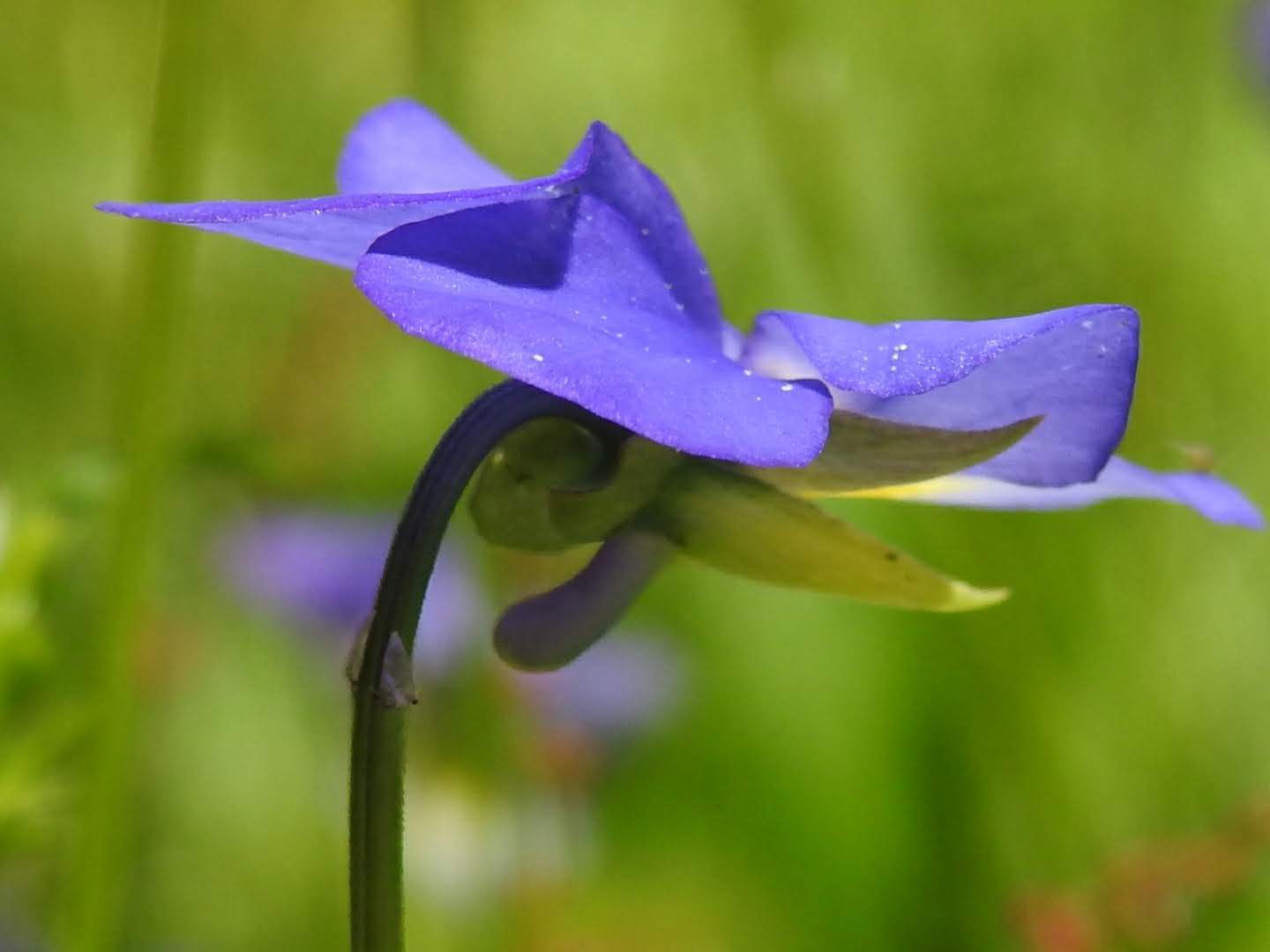
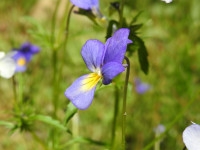
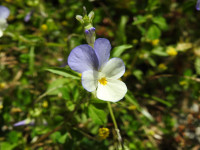
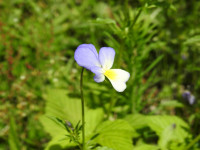
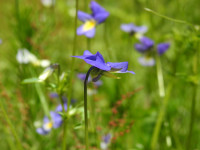
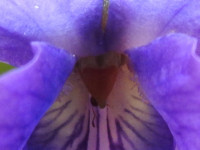
The flowers are solitary, hermaphroditic, zygomorphic and pentamerous, borne on long axillary peduncles equipped with small bracteoles. The corolla, 1.5-3 cm wide, shows a very wide color variety including combinations of violet, white and yellow, often in a tricolor arrangement that gave the species its name. The four upper petals are directed upwards, longer than the sepals, and the corolla appears flat. The lower petals often have reddish streaks. The spur is thin, 3-6 mm long, generally violet in color, with calyx appendages slightly shorter.
The fruit is an ellipsoid capsule, glabrous, with three valves and six prominent longitudinal ribs, 8-12 mm long, slightly shorter than the sepals. It contains numerous obovoid, smooth, brown seeds, equipped with a small white elaiosome, a structure rich in nutrients that promotes dispersal by ants.
Habitat and distribution
The species is widely distributed in Europe, Western and Northern Asia, as well as in some areas of Africa and North America. In Italy its presence is reported mainly in northern regions and many other locations of the peninsula, although the precise distribution is subject to verification due to frequent confusion with related species such as Viola arvensis.
It lives in open habitats such as cultivated fields, pastures, grassy and uncultivated places, preferring well-drained soils often sandy or gravelly. It grows from sea level up to submontane altitudes, adapting to sunny or partially shaded exposures.
Flowering period
Flowering extends from spring to autumn, typically from April to October, with variations related to altitude and local climate. In different environments earlier or later flowering can be observed, but in general the species maintains a long flowering period.
Ecology and pollination
Wild Pansy is mainly pollinated by insects (entomogamous), which are attracted by the bright colors and morphology of the corolla. The presence of reddish streaks on the lower petals acts as a guide for pollinators. Seed dispersal occurs mainly through myrmecochory: ants are attracted by the elaiosome, a small appendage rich in fatty substances that coats the seeds. After consuming this nutritious part, ants abandon the seeds in their underground nests, thus promoting effective and safe sowing.
Curiosities and traditional uses
Wild Pansy is a medicinal species with depurative, diuretic, expectorant, emollient and laxative properties. It contains compounds such as violaxanthin, violaquercitrin, saponins, tannins, mucilages and traces of salicylic acid. Traditionally it has been used in the treatment of skin eruptions, juvenile acne, psoriasis, eczema, furunculosis, as well as for urinary tract ailments and cough.
Interesting is the history of cultivated wild pansies, which partly derive from this species, often through hybridizations with other species such as Viola lutea and Viola altaica. The cultivation of these ornamental varieties began in England at the beginning of the 19th century, giving rise to a remarkable range of cultivars characterized by very variable flowering colors and petal patterns.
Etymology
The genus name "Viola" derives from Latin and probably has Mediterranean origins, connected to the Greek ἴον (íon), which indicated plants with similar flowers such as the sweet violet. The specific epithet "tricolor" means "three-colored", referring to the characteristic corolla composed of petals of different colors (violet, yellow and white), typical of the species.
The Italian common name "Wild Pansy" alludes to the resemblance with ornamental violets known as "pensieri" (pensée in French), often cultivated for their bright and decorative flowers.
Sources
- Prof. S. Pignatti, "Flora d'Italia"
- Acta Plantarum - Flora delle regioni italiane (scheda di Anja Michelucci)
- Tela Botanica / H. Coste, "Flore descriptive et illustrée de la France"
- World Flora Online (WFO)
Characteristics
Scheda botanica
| Famiglia | Violaceae |
|---|---|
| Fioritura | maggio – luglio |
| Forma biologica | Scapose |
| Habitat | with white flowers, with yellow flowers, with purple flowers |
Domande frequenti
- Quando fiorisce Wild Pansy?
- Wild Pansy fiorisce maggio – luglio.
- Che tipo di pianta è Wild Pansy?
- Wild Pansy è una Therophytes (Scapose) secondo la classificazione di Raunkiaer.
- A quale famiglia appartiene Wild Pansy?
- Wild Pansy appartiene alla famiglia botanica Violaceae.
Where I found it (9 sightings)
Classification
- Kingdom
- Plantae
- Family
- Violaceae
- Full name
- Viola tricolor L.
- Synonyms
- Viola saxatilis F.W.Schmidt; Viola tricolor L. subsp. saxatilis (F.W.Schmidt) Jan; Viola tricolor L. subsp. subalpina Gaudin
- Life form
- Therophytes scapose
Similar species
Search for species with similar characteristicsFurther reading
Noticed an error in the identification? Write to me
Other species of the same family
Violaceae
Explore
Other species of Violaceae