Description
Botanical characteristics
Plants belonging to the family Zygophyllaceae are generally herbaceous or shrubby, often adapted to arid conditions, with many taxa presenting succulent or resinous structures. The typical habit includes shrubs and some herbs, frequently found in desert, arid, or even saline environments.
The leaves are opposite, stipulate, and typically pinnate, with a simple or bi- or trifoliate structure. This leaf characteristic is important for recognizing the family.
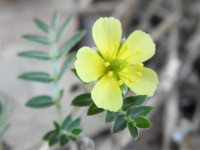
The flowers are hermaphroditic, actinomorphic in most cases, although rarely they can be dioecious or zygomorphic. They are composed of five whorls, with five or four petals and sepals, and present a floral axis that forms a disc. The stamens are generally ten or eight, while the ovary is superior and formed by 3-5 carpels (with variations from 2 to 12). The flower is mostly solitary.
The fruit can be a capsule or divided into spiny mericarps; in some cases it appears as a drupe. These distinctive characters are useful for identifying species belonging to this family.
Distribution and diversity
The family Zygophyllaceae includes about 22 genera, distributed across all continents, with a typical distribution especially in regions characterized by arid or desert climates. They are therefore plants highly adapted to conditions of water and environmental stress.
This family is present on a global scale, with a higher concentration of species in arid or semi-arid areas, where they play an important ecological role.
Main genera and representative species
Among the best-known genera of the family Zygophyllaceae are:
- Tribulus: including Tribulus terrestris, a species known for its presence in arid environments and for some medicinal properties.
- Zygophyllum: a large genus with many species adapted to extreme conditions.
- Fagonia: includes species often used in traditional medicine.
- Larrea: includes shrubs typical of American desert areas.
- Guaiacum: known for its hard wood and medicinal applications.
In Italy the family is poorly represented, and the autochthonous species belonging to Zygophyllaceae are rare or absent, mostly being plants typical of arid environments uncommon in the national territory.
Etymology
The family name derives from the type genus Zygophyllum, composed of the Greek “zygon” (yoke) and “phyllon” (leaf), referring to the arrangement of the leaves, which appears as two opposite leaflets connected by a common petiole, similar to a yoke.
Curiosities and uses
Plants of the family Zygophyllaceae are often important in arid ecosystems, where they contribute to soil stabilization and provide habitat and nourishment for various animal species.
Some genera, such as Tribulus, are used in traditional medicine for their therapeutic properties, while others, like Guaiacum, are known for valuable wood and pharmaceutical uses.
Sources
- Wikipedia
Species of the family
1 species catalogued
Explore
Other botanical families