Botanical family
Valerianaceae
Description
Botanical characteristics
The plants traditionally attributed to the family Valerianaceae are mainly herbaceous, characterized by an herbaceous habit with leaves arranged oppositely along the stem. The leaves are generally simple and can be entire or slightly toothed.
The flowers are small and are grouped in inflorescences, often in corymbs or panicles. The corolla is sympetalous, that is with petals partially or totally fused, regular or almost regular, and represents a particular case for symmetry, since in this family there is a flower lacking symmetry (asymmetric). The ovary is inferior, a characteristic meaning that the other parts of the flower are inserted above it.
The fruit is typically an achene, a type of dry indehiscent fruit, which promotes seed dispersal.
Distribution and diversity
Originating from an evolutionary lineage dating back about 60 million years, the family is mainly distributed in the temperate regions of the northern hemisphere, with particular presence in the Mediterranean, mountainous and temperate areas of Europe and Asia. The family includes about fifteen genera, with a total number of species exceeding 300 worldwide.
According to the traditional classification (Cronquist System, 1981), Valerianaceae were considered an autonomous family within the order Dipsacales. However, more recent phylogenetic classifications (APG IV, 2016) have included these genera within the family Caprifoliaceae, thus revising the taxonomic status of Valerianaceae.
Main genera and representative species
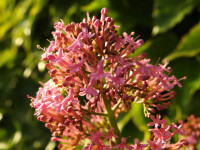
Among the most important genera is Valeriana, which includes well-known species such as Valeriana officinalis, a widely distributed perennial herbaceous plant in Europe and used for its medicinal properties. Another significant genus is Centranthus, which includes species like Centranthus ruber (red valerian), common in gardens and Mediterranean rocky areas.
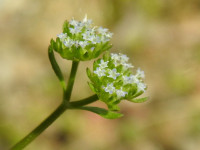
In Italy, several species belonging to these genera are present, particularly Valeriana officinalis, widespread in humid and cool environments, and Centranthus ruber, often cultivated and naturalized in Mediterranean areas. The genus Valerianella, commonly known as "valerianella" or "lamb's lettuce," also includes species used as salad, such as Valerianella locusta.
Other genera of the family include Patrinia, Nardostachys, and Phuodendron, although with lesser presence or interest in the spontaneous Italian flora.
Etymology
The name of the family derives from the main genus Valeriana, whose name has Latin origins. The term valeriana is linked to the Latin verb valere, meaning "to be strong, to be well," probably referring to the stimulating and tonic medicinal properties attributed to the plants of this genus since ancient times.
Curiosities and uses
The plants traditionally classified in Valerianaceae have considerable ecological importance in temperate ecosystems, contributing to the biodiversity of herbaceous environments and mountain meadows.
From the point of view of uses, some species are known for their medicinal properties. Valeriana officinalis is famous for its use as a natural remedy for sleep disorders and anxiety, thanks to its sedative compounds. The genus Valerianella is instead appreciated in the food sector, with species such as Valerianella locusta used as fresh salad.
Some species of Centranthus are cultivated for ornamental purposes for their resistance and decorative flowers, especially in Mediterranean regions.
Sources
- Wikipedia
Species of the family
2 species catalogued
Explore
Other botanical families