Botanical family
Typhaceae
Description
Botanical characteristics
Plants belonging to the family Typhaceae are predominantly marsh herbs, typical of wet environments such as swamps, lake shores, and watercourses. These plants are characterized by an erect habit with a creeping rhizome that develops in the mud, allowing them to anchor firmly in water-saturated soils.
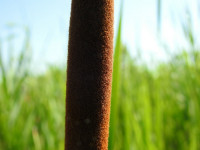
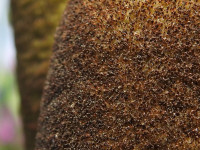
The leaves are strap-shaped, long and narrow, often leathery in texture, arranged alternately and with parallel veins, typical of monocotyledons. The flowers are unisexual and monoecious, meaning present on the same plant but distinct in male and female flowers. They lack a perianth or have a very reduced perianth. The inflorescence is particularly characteristic, taking on a cylindrical or globose shape. In this structure, the male flowers occupy the upper part, while the female flowers are located in the lower part, giving the inflorescence a segmented and easily recognizable appearance.
The fruits are generally achenes, small and numerous, dispersed by the plant through various mechanisms adapted to the aquatic environment.
Distribution and diversity
The family Typhaceae is distributed worldwide, with species present in many temperate and tropical regions. Plants of this family prefer aquatic or marshy habitats and are often important components of wetland ecosystems.
From a taxonomic point of view, the family mainly includes two genera: Typha and Sparganium. The most recent classification (APG IV) groups both in Typhaceae, while earlier classifications, such as the Cronquist System, considered them belonging to two distinct families (Typhaceae and Sparganiaceae). Overall, the number of recognized species varies, but it is a relatively small group in terms of diversity compared to other monocot families.
Main genera and representative species
The two main genera of the family are:
-
Typha: this genus includes species commonly known as “cattail” or “bulrush.” These plants are widespread also in Italy, where various species such as Typha latifolia (common bulrush) and Typha angustifolia can be found. These species are easily recognizable by their compact cylindrical inflorescence, often used as an indicator of wet environments.
-
Sparganium: less known compared to Typha, this genus includes aquatic species with globose or spike-shaped inflorescences, also typical of marshy and aquatic environments. In Italy, some species of Sparganium are present in wetland and lagoon areas.
Etymology
The name of the family derives from the type genus Typha, a term of Greek origin that indicated marsh plants traditionally used for various purposes. The suffix “-aceae” is typical of botanical families, used to indicate the taxonomic grouping.
Sources
- Wikipedia
Species of the family
2 species catalogued
Explore
Other botanical families