Botanical species
Polygala alpestris
Rchb.
Poligala alpestre
Description
Morphological description
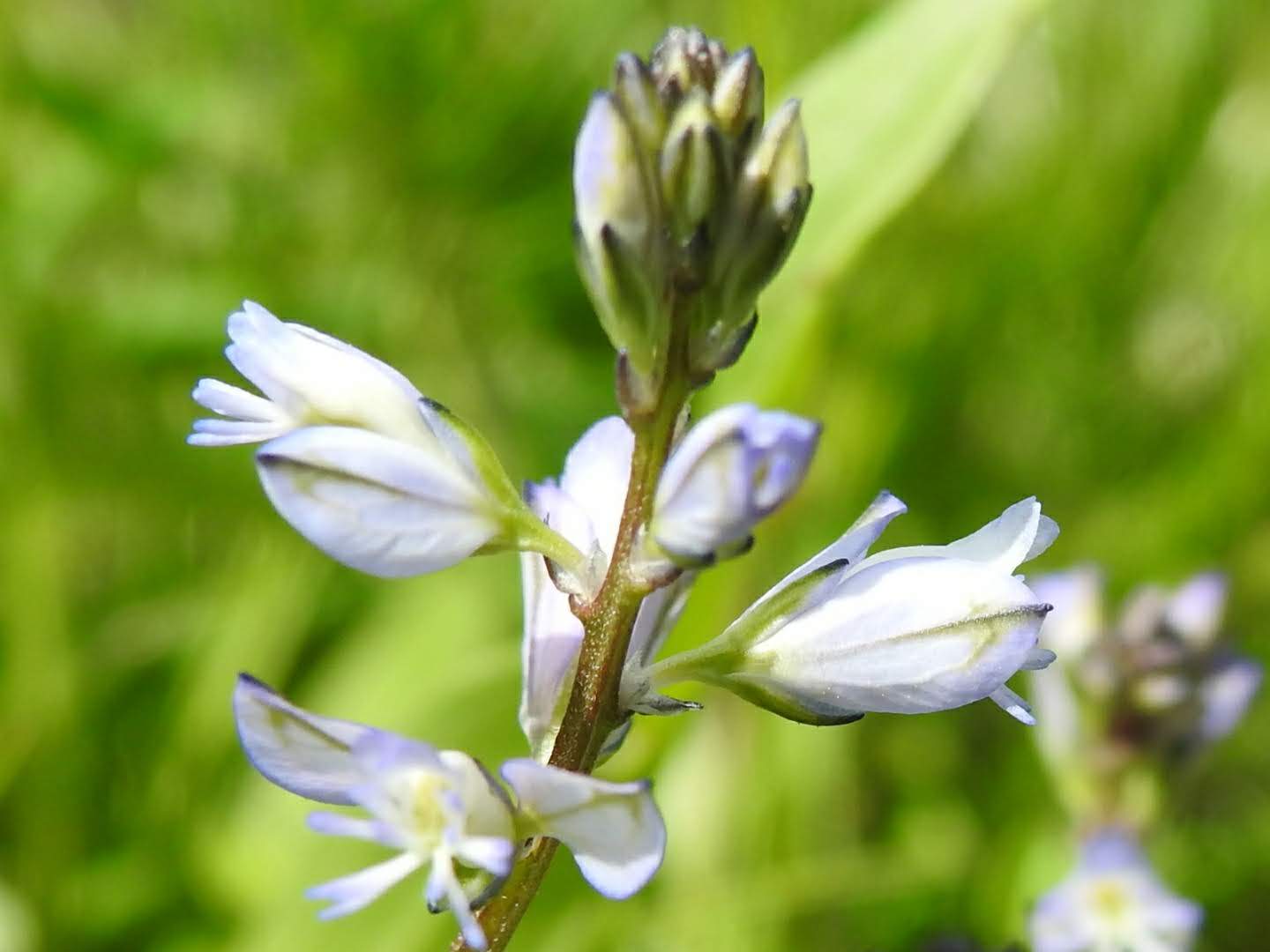
The plant is a perennial species of modest size, with a height generally ranging between 5 and 15 cm. The habit is scapose: the stems are briefly creeping and slightly lignified at the base, branched and ascending, hairless (glabrous). The root system is taprooted, a characteristic that allows deep and stable anchorage in the soil.
The basal leaves never form a tight rosette, are arranged alternately and are spatulate in shape, smaller than the cauline leaves, with dimensions around 3 x 7 mm. The cauline leaves, also alternate, have a lanceolate or elliptic-lanceolate shape and tend to progressively elongate towards the apex of the stem, reaching up to 5 x 25 mm; at the top they wrap around the base of the floral raceme.
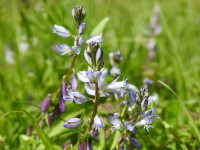
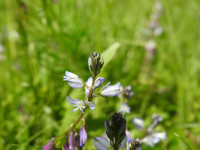
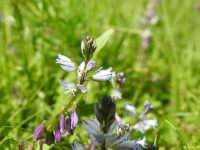
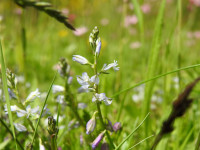
The flowers are gathered in short pyramidal racemes, 15 to 35 mm long, and can number from 5 up to 20 per inflorescence. The corolla color varies from violet to blue, rarely specimens with white flowers occur. The bracts, about 1 mm, are equal to or shorter than the pedicels. The calyx has oval mucronate petaloid wings, about 3.5 x 5 mm long, with faint veins. The corolla is about 8 mm long, protruding from the wings, and presents a strongly fringed lower petal, a distinctive characteristic of the species.
The fruit is a sessile capsule, 3-4 mm long. The seeds have a fleshy elaiosome, with appendages ranging from one fifth to one third of the seed length; this structure is fundamental for dispersal thanks to the attraction of ants.
Habitat and distribution
This species is typical of mountainous and subalpine environments of southern Europe, with a distribution that spans the Alpine chains, the Iberian Peninsula, the Balkans, and possibly also the Caucasus or Anatolia. In Italy it is mainly present in the Alps and the Apennines, with greater frequency in alpine and subalpine zones.
It prefers subalpine and alpine pastures and meadows, especially on basic soils of calcareous origin in the alpine area. On the Apennine reliefs, instead, it adapts to more acidic soils. The growth altitude generally varies between 1600 and 2400 meters, with sporadic occurrences up to 2700 meters.
The microhabitat is characterized by pastures, meadows, and dwarf shrub thickets, where the plant fits into contexts with a cool climate and often exposed to intense light.
Flowering period
Flowering occurs between May and August, with possible altitudinal and geographical variations linked to local climatic conditions. In higher environments flowering may be concentrated towards the central summer months, while in lower areas it can start as early as May.
Ecology and pollination
Polygala alpestris is generally pollinated through entomogamy, with a particular role played by ants, which besides pollination also contribute to seed dispersal. These insects are attracted by the sugary elaiosome present on the seeds and facilitate their spread, a mechanism called myrmecochory. Autogamy is a rare phenomenon for this species.
This ecological strategy is very efficient in mountain environments, where climatic conditions and the presence of pollinating insects can be limited.
Curiosities and traditional uses
The genus name derives from the Greek "polys" (many) and "gala" (milk), referring to the ancient belief that these plants stimulated milk production both in livestock and in women.
The species of the genus Polygala are known for their medicinal properties: they possess a moderate hemolytic power and should be used with caution. Historically they have been used as expectorants, antitussives, diuretics, sudorifics, and tonics for the stomach and liver. Furthermore, they are considered lactation stimulants.
From an ecological point of view, the relationship with ants is a fascinating example of mutualism between plants and insects, which contributes to the survival and spread of the species in often challenging mountain environments.
Etymology
The scientific name "Polygala" derives from Greek and literally means "much milk." This name reflects the ancient popular belief that plants of this genus increased milk production in animals and women. The specific epithet "alpestris" indicates its affinity with alpine environments, particularly the lower montane altitudinal belts compared to the proper alpine ones.
The Italian common name "Poligala alpestre" precisely recalls the typical habitat of this species, i.e., the alpine and subalpine mountain zones.
Sources
- Prof. S. Pignatti, Flora d'Italia
- Acta Plantarum - Flora delle regioni italiane (sheet by Marinella Zepigi)
- World Flora Online (WFO)
Characteristics
Scheda botanica
| Famiglia | Polygalaceae |
|---|---|
| Fioritura | maggio – agosto |
| Forma biologica | Scapose |
| Habitat | with purple flowers, Perennial plant, plant with a scapose habit |
Domande frequenti
- Quando fiorisce Poligala alpestre?
- Poligala alpestre fiorisce maggio – agosto.
- Che tipo di pianta è Poligala alpestre?
- Poligala alpestre è una Hemicryptophytes (Scapose) secondo la classificazione di Raunkiaer.
- A quale famiglia appartiene Poligala alpestre?
- Poligala alpestre appartiene alla famiglia botanica Polygalaceae.
Where I found it (6 sightings)
Classification
- Kingdom
- Plantae
- Family
- Polygalaceae
- Full name
- Polygala alpestris Rchb.
- Life form
- Hemicryptophytes scapose
Similar species
Search for species with similar characteristicsFurther reading
Noticed an error in the identification? Write to me
Other species of the same family
Polygalaceae
Explore
Other species of Polygalaceae