Botanical family
Linaceae
Description
Botanical characteristics
Plants of the family Linaceae are angiosperms generally herbaceous or shrubby, characterized by a varied habit that can also include small trees in tropical species. The leaves are simple, usually alternate or opposite, without stipules, and of variable shape depending on the genus and species.
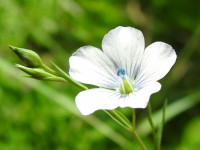
The flowers are typically hermaphroditic and actinomorphic, that is radial and symmetrical in multiple planes. They generally have five sepals and five free petals, often blue, yellow, or white in color, which contribute to species identification. The stamens are usually ten and arranged in two whorls. The ovary is superior and formed by two carpels, with a single stigma.
The fruit is usually a capsule that opens to release the seeds, although in some cases it can be a berry. The seeds of some species, such as common flax (Linum usitatissimum), are particularly known for their nutritional and industrial properties.
Among the distinctive characters of the family is the presence of hermaphroditic flowers with a pentamerous corolla and the structure of the capsular fruit, in addition to the typical arrangement of stamens and the superior bicarpellary ovary.
Distribution and diversity
The family is cosmopolitan, with a distribution that covers all climatic areas of the world, from the Mediterranean to tropical zones. It includes about nine genera and a variable number of species, with the genus Linum as the largest and most widespread.
In Italy, some species of the genus Linum are present, representing the typical family presence in the national territory. Globally, the family includes herbaceous and shrubby forms adapted to different environments, from temperate to tropical climates.
Main genera and representative species
The most important and well-known genus is Linum, which includes species of great botanical and economic interest. Among these:
- Linum usitatissimum (common flax): cultivated for textile fiber and oil seeds;
- Linum bienne: wild species also present in Italy;
- Other genera of the family, less widespread in Europe and Italy, include Anisadenia, Hebepetalum, Hugonia, Indorouchera, Radiola, Reinwardtia, Roucheria, and Tirpitzia.
These genera are mainly distributed in tropical and subtropical areas, with some shrubby or arboreal species.
Etymology
The family name derives from the type genus Linum, a Latin term meaning “flax,” a plant historically cultivated and known since antiquity for the production of textile fibers and oil seeds.
Curiosities and uses
The Linaceae family has significant importance both ecologically and economically. The species Linum usitatissimum has been cultivated for millennia for the production of textile fiber (flax) and for seeds rich in oil, used both in the food industry and industrially. Flax fibers are among the oldest known textile raw materials.
In ornamental horticulture, some species of the genus Linum are appreciated for their delicate and colorful flowers, often used in gardens and flower beds.
From an ecological point of view, wild species of Linum contribute to the biodiversity of Mediterranean and temperate habitats, providing food resources for pollinating insects.
Sources
- Wikipedia
Species of the family
1 species catalogued
Explore
Other botanical families