Botanical family
Commelinaceae
Description
Botanical characteristics
The plants belonging to this family are generally herbaceous monocotyledons, often characterized by an herbaceous habit that can vary from more delicate species to slightly semi-succulent forms. The leaves are arranged alternately along the stem and are often brightly colored, sometimes with a fleshy texture in some species.
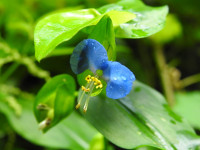
The flowers, generally small and short-lived (about one day), are hermaphroditic and distinguished by the presence of three petals clearly separated from the sepals, as they do not form a perigonium. The ovary is superior and divided into three parts. The typical fruit is a capsule enclosing the seeds.
The distinctive features of this family therefore include:
- Hermaphroditic flowers with three petals separated from the sepals
- Superior trilobed ovary
- Leaves alternate along the stem
- Fruits generally capsular
- Short flower life cycle, with flowering often limited to a single day
Distribution and diversity
This family is mainly distributed in tropical and subtropical regions, with a significant presence in the American continent. The species are mainly adapted to warm and humid climates, where they grow spontaneously. Some species have also naturalized in other areas, becoming neophytes.
At a global level, the family includes numerous genera and species, although no precise number has been indicated. Plants of this family are particularly common in tropical habitats, where they contribute to local biodiversity.
Main genera and representative species
Among the most important genera of this family are, for example, those widely distributed in the American tropical zones. Some species are known for their ability to adapt to different environments and for ornamental use.
In Italy, the spontaneous presence of Commelinaceae is limited or absent, but some species can be cultivated as ornamental plants or present as neophyte plants in some regions.
Etymology
The name of the family derives from the type genus, which in turn takes its name from Jan Commelijn, a 17th-century Dutch botanist. This name was assigned to the family in 1804.
Sources
- Wikipedia
Species of the family
1 species catalogued
Explore
Other botanical families