Botanical family
Colchicaceae
Description
Botanical characteristics
The family Colchicaceae includes monocotyledonous angiosperm plants typical of the order Liliales. The typical habit of these plants is herbaceous, often bulbous or rhizomatous, with a perennial life cycle. The leaves are generally simple, arranged alternately or basally, with variable shapes but often lanceolate or linear.
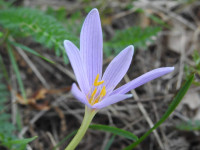
The flowers, characteristic of this family, are generally hermaphroditic, actinomorphic and pentamerous, with tepals (perianth segments indistinguishable into sepals and petals) usually in number of six, often colored and showy. The androecium is composed of six stamens, and the gynoecium is inferior, formed by three fused carpels. The fruit is typically a capsule containing seeds often covered by specialized integuments.
Among the distinctive characters of the family is the presence of specific alkaloids, such as colchicine, which confer toxic and medicinal properties to the plants. This compound is also important for the diagnosis and treatment of some human diseases. Plants of this family also stand out for their floral structure and the particular arrangement of reproductive organs.
Distribution and diversity
The family Colchicaceae has a worldwide distribution, prevalent in the southern hemisphere and in temperate and subtropical regions. These plants are mainly found in Africa, Europe (including Italy), Asia, and Australia.
The family includes about 14 genera with a variable number of species, some of which are well known for their ornamental and pharmacological value. The species diversity makes this family interesting both from an ecological and applicative point of view.
Main genera and representative species
Among the most important genera of the family are:
- Colchicum: probably the best-known genus, includes species such as Colchicum autumnale, present in Italy, known for its autumnal flowers and colchicine production.
- Gloriosa: a tropical genus, characterized by showy and peculiar flowers.
- Baeometra, Burchardia, Disporum, Iphigenia, Wurmbea and others, which are distinguished by specific characteristics and geographic distribution.
In Italy, the genus Colchicum is mainly present, with spontaneous species that bloom in autumn and are easily recognizable by their crocus-like flowers but with leaves absent during flowering.
Etymology
The family name derives from the genus Colchicum, which in turn takes its name from the ancient region of Colchis (in present-day Georgia), where these plants were known since antiquity.
Curiosities and uses
Plants belonging to the family Colchicaceae are known for the production of colchicine, an alkaloid used in the medical field especially for the treatment of gout and in cytogenetics to block cell division. This compound makes many plants of the family toxic if ingested, therefore caution is required in their use.
From an ornamental point of view, species such as those of the genus Colchicum are appreciated for their autumnal flowers, which enrich gardens and spontaneous meadows.
Sources
- Wikipedia
Species of the family
1 species catalogued
Explore
Other botanical families