Botanical species
Verbena officinalis
L.
Vervain
Description
Morphological description
Perennial herbaceous plant, with an ascending or erect habit, varying in height from 25 to 100 cm. The stem is typically quadrangular, with pronounced and often grooved edges, partially woody at the base and branched in the upper part. The surface of the stem is hirsute and pubescent, especially along the edges, giving it a rough texture to the touch.
The leaves are arranged oppositely along the stem and show considerable morphological variability depending on their position. The lower leaves are generally ovate-lanceolate, with a toothed or incised margin up to pinnatifid, and have a short petiole. The middle leaves are larger, often trilobed with the central lobe more developed than the lateral ones, with toothed margins; the upper leaves become progressively smaller, sessile and sometimes entire. The leaf surface is leathery, rough and pubescent, with prominent veins on the underside.
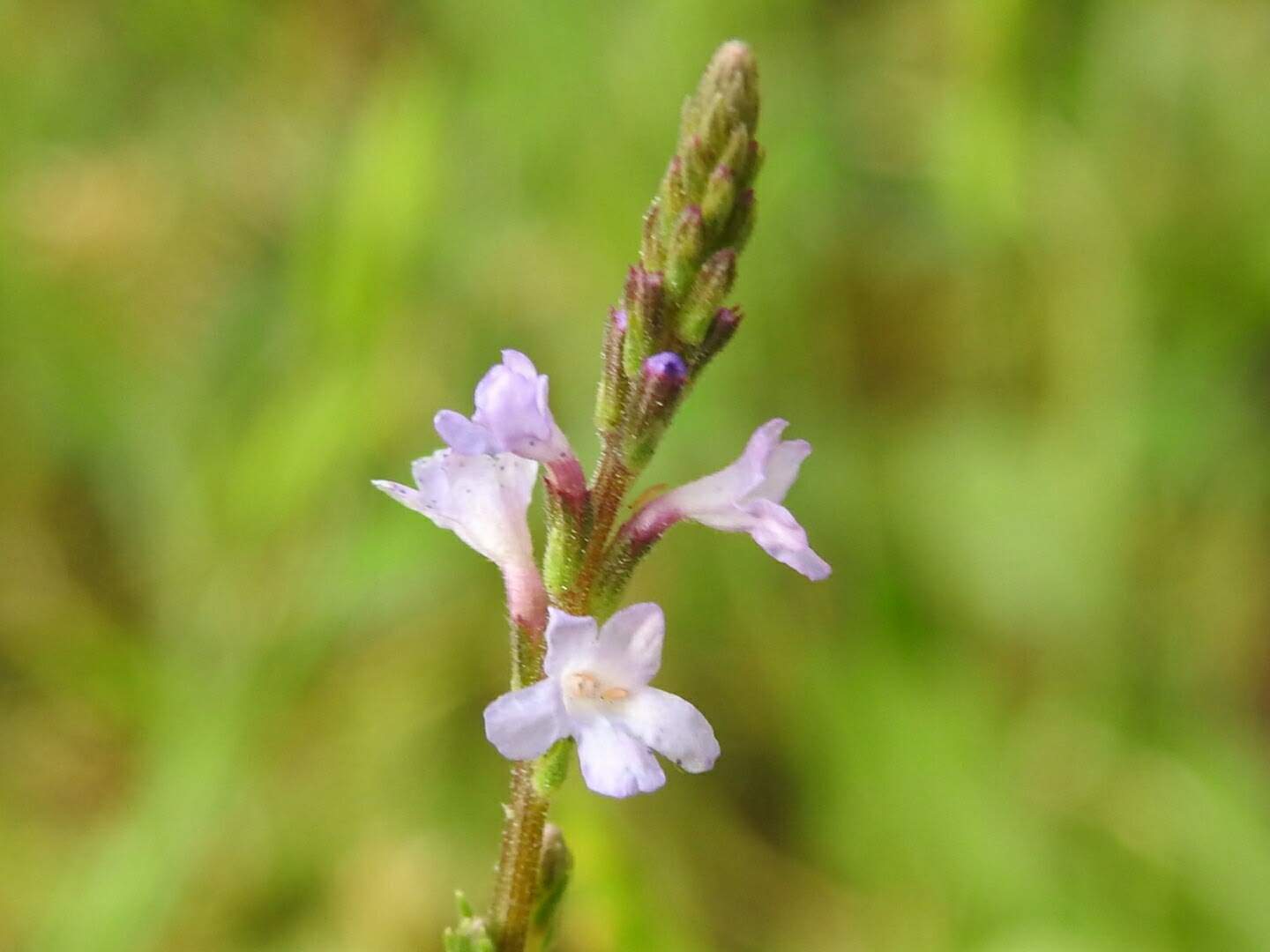
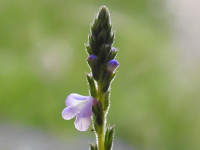
The flowers are small, with color varying from lilac to light violet, grouped in thin and elongated terminal spikes measuring on average 3-6 cm during flowering and can reach 10-25 cm during fruiting. The spikes are often branched with 1-2 pairs of basal arcuate branches and bear lanceolate-acuminate bracts shorter than the calyx. The calyx is tubular, glandular, divided into 4-5 short and hirsute teeth, about 15 mm long. The corolla, about 4-6 mm long, is funnel-shaped with 5 slightly bilabiate lobes and appears pinkish-violet or lilac especially on the edge. The stamens, generally four, are included in the corolla and sometimes two can be sterile.
The fruit is a tetrachene formed by four cylindrical, smooth mericarps, about 1.5-2 mm long, with 4-5 longitudinal ribs on the back; each carpel contains one seed. The root system is fusiform, typical of perennial plants that renew annually through buds located at ground level.
Habitat and distribution
The species is widely distributed throughout the Italian territory and the Mediterranean basin, with a cosmopolitan distribution including Europe, Asia, Africa, and America. It mainly grows as a synanthropic plant, i.e., closely associated with human settlements, and does not establish itself stably in natural plant communities.
It prefers anthropized habitats such as uncultivated places, road and path margins, field edges, ruderal areas, and disturbed soils. It grows on a wide range of soil types, often preferring well-drained substrates but with sufficient moisture, and is found from the plains up to about 1200 meters altitude.
Flowering period
Flowering generally extends from June to October, with possible variations depending on latitude and local climatic conditions. During this period the plant produces the characteristic lilac-violet flowering spikes.
Ecology and pollination
Vervain reproduces mainly sexually through seeds. Pollination is entomogamous, carried out by pollinating insects attracted by the bright color and conical arrangement of flowers in the terminal spikes. The structure of the corolla, with included stamens and a small corolla tube, facilitates visits by small pollinating insects such as bees and butterflies.
The seeds are mainly dispersed by falling to the ground near the mother plant, but can also be transported by external agents such as wind or animal passage.
Curiosities and traditional uses
This plant has a long history of medicinal and symbolic use. In ancient times it was considered sacred and used in religious and magical rituals, with strong symbolic value in popular practices; for example, it was traditionally gathered on St. John's night to exploit its presumed magical virtues. In Egyptian mythology it is linked to the goddess Isis, while in Christianity it is known as “cross herb” for its use in healing the wounds of the crucified Christ.
From a medicinal point of view, vervain is recognized for its bitter-tonic, diuretic, anti-inflammatory, analgesic, and antineuralgic properties. It is used to calm nervousness, tension, insomnia, and menstrual pain, promote sweating, and stimulate liver function. Vervain infusions are used as gargles for oral inflammations and as ocular decongestants. Moreover, thanks to its astringent properties, it is indicated in cases of diarrhea and intestinal colic.
Once widely used in folk medicine, today it is mainly employed for specific phytotherapeutic preparations, while in the past it was also known to treat throat tumors and disorders related to kidney stones.
Etymology
The genus name “Verbena” has ancient and uncertain origins. It could derive from the Celtic “ferfaen” (from “fer” = to drive away, and “faen” = stone), referring to the traditional use of the plant for kidney stone problems. Another possible origin is “Herba veneris”, recalling the aphrodisiac qualities attributed to the plant. In ancient Rome, vervain was considered a sacred plant used in sacrifices and religious rites, from which also derives the common name “sacred herb”.
The Italian name “Vervain” reflects its wide distribution and its traditional recognition as a medicinal and commonly used plant.
Sources
- Acta Plantarum - Flora delle regioni italiane (actaplantarum.org)
- Acta Plantarum - Flora delle regioni italiane (scheda di Marinella Zepigi)
- Tela Botanica / H. Coste, Flore descriptive et illustrée de la France
- World Flora Online (WFO)
Characteristics
Scheda botanica
| Famiglia | Verbenaceae |
|---|---|
| Fioritura | tutto l'anno |
| Forma biologica | Scapose |
| Habitat | with lilac flowers, Perennial plant, with blue-purple flowers |
| Uso officinale | Pianta officinale |
Domande frequenti
- Quando fiorisce Vervain?
- Vervain fiorisce tutto l'anno.
- Che tipo di pianta è Vervain?
- Vervain è una Hemicryptophytes (Scapose) secondo la classificazione di Raunkiaer.
- A quale famiglia appartiene Vervain?
- Vervain appartiene alla famiglia botanica Verbenaceae.
Where I found it (6 sightings)
Classification
- Kingdom
- Plantae
- Family
- Verbenaceae
- Full name
- Verbena officinalis L.
- Life form
- Hemicryptophytes scapose
Similar species
Search for species with similar characteristicsFurther reading
Noticed an error in the identification? Write to me
Explore
Other species of Verbenaceae